
About us
Our impact
Jami enriches and saves lives impacted by mental illness in the Jewish community.
We believe we must continue to meet the changing needs of our community and deliver on the promises that we make to those who seek our treatment, support, advice and education. Consequently, we continuously evaluate our work, listen to the views of those who use our services, and take these learnings to improve what we do and how we do it.

How we have been changing lives
(April 2025 – March 2026)
Front Door


Front door: Guiding people through the challenging journey of navigating mental health services and providing emotional support and expert advice from the moment someone contacts Jami.
We supported 620 people at our “front door” seeking advice, information or signposting, so that they, or their carers, could get the help they needed.
Our Intake team responded to enquiries within an average of 1.6 working days, offering timely, non-judgemental support.
We had 437 new referrals (25 per cent increase from the year before), half of the new referrals were for our counselling service
We had 95 carer referrals (comparable to last year).
In our annual service user survey, among respondents who were new to Jami services in the last 12 months:
100% said they felt listened to with compassion and understanding
100% said they received the information they needed to decide what to do next
91% agreed that we met their needs (83% last year)
85% were satisfied with the waiting time at the front door (70% last year)
Treatment & support


Treatment and support: Providing professional, person-centred and peer support services for young people and adults with mental illness, as well as their families and carers.
1,214 children, adults and carers benefitted from individual/group treatment and support – on average, 550 people every month.
We estimate 607 unique individuals used our Head Room’s community programme. The programme ran 414 events with a total of 4,718 attendances.
Across our services, the top three areas of support were social connection (42 per cent), psychological support (35 per cent) and practical/environmental support (25 per cent).
We supported 146 risk-management plans for those experiencing risk.
People using our services improved their personal goal (GBO) scores by an average of 2.83 points, which is above the national benchmark of 2.45 points for meaningful change.
62% of service users assessed as ‘clinical’ (requiring medication and therapy) when they joined our counselling service moved to ‘non‑clinical’ status by the time they left, exceeding the NHS Talking Therapies programme target of 50%.
In our annual survey, respondents told us that Jami improved their access to appropriate support, enabled them to feel heard, increased their social connection and led to improvements in their mental health.
93% agreed or strongly agreed that they feel supported by Jami staff (87% last year).
88% agreed or strongly agreed that at Jami they feel they are in safe space and accepted for who they are.
87% agreed or strongly agreed that they feel part of a community of peers who understand and help them (79% last year).
Education & Suicide Prevention


Education and Suicide Prevention: Focusing on specialised areas where we can provide an expert voice to the Jewish community and beyond.
We estimate 1,234 unique individuals participated in our trainings. Jami Education ran 72 events, with 1,280 attendances.
We worked with leaders through Mental Health First Aid, and bespoke programmes, reaching 62 people over 7 courses.
Following Education events:
98% rated our training as Good or excellent.
98% agreed or strongly agreed that they have gained knowledge, skills or ideas about the topic of the training.
Jami launched a landmark suicide prevention programme this year designed specifically for the Jewish community, built on 3-years of research, consultation and lived-experience insight. It is designed to build confidence and skills to support those experiencing suicidal thoughts.
We also worked with Parliamentarians to ensure that the psychological needs of the Jewish community are seen and heard at the highest levels
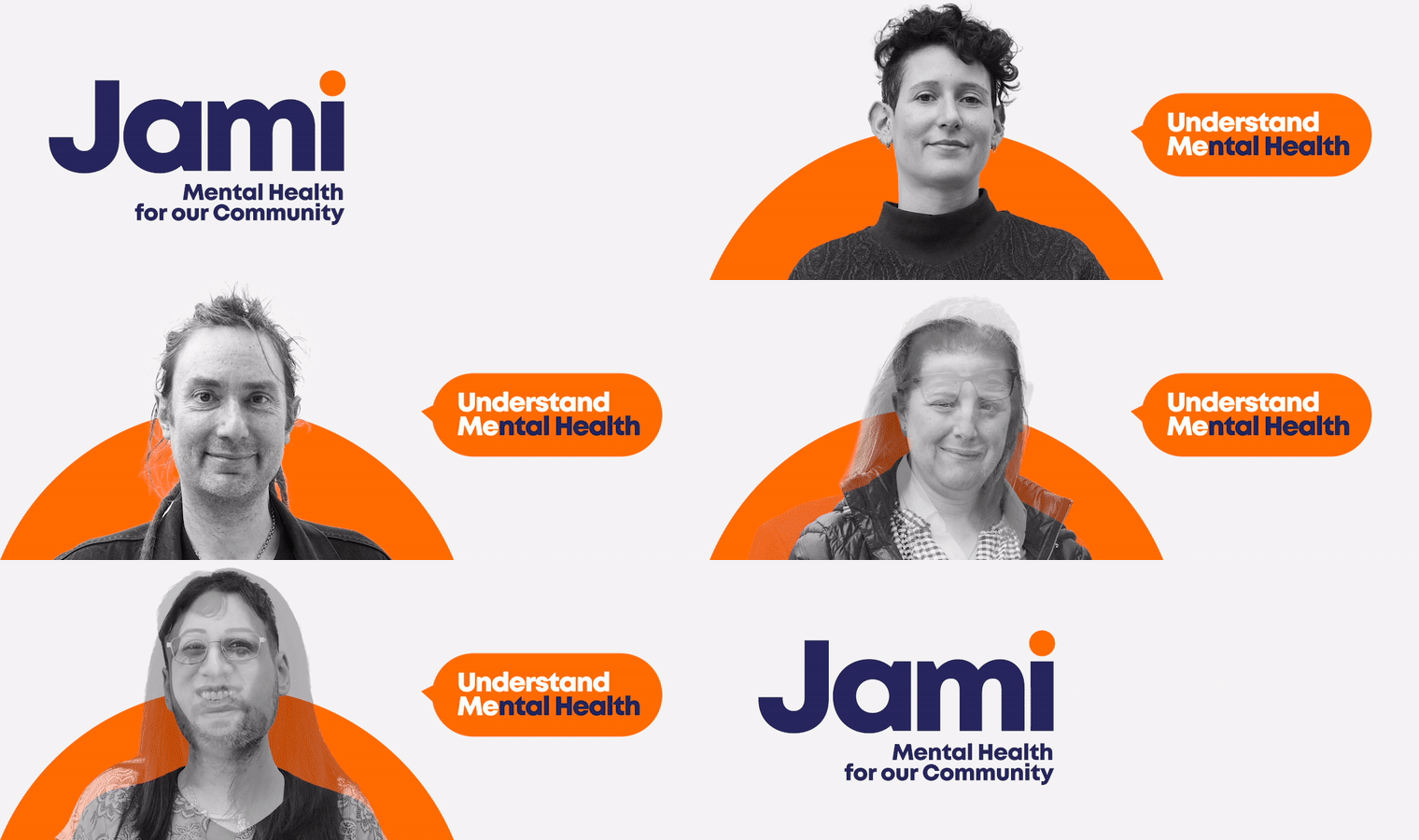
“If it wasn’t for Jami, I probably wouldn’t be alive today. And that’s why I’m sharing my story with you.”
“If it wasn’t for Jami, I probably wouldn’t be alive today. And that’s why I’m sharing my story with you.”

How we spend our money